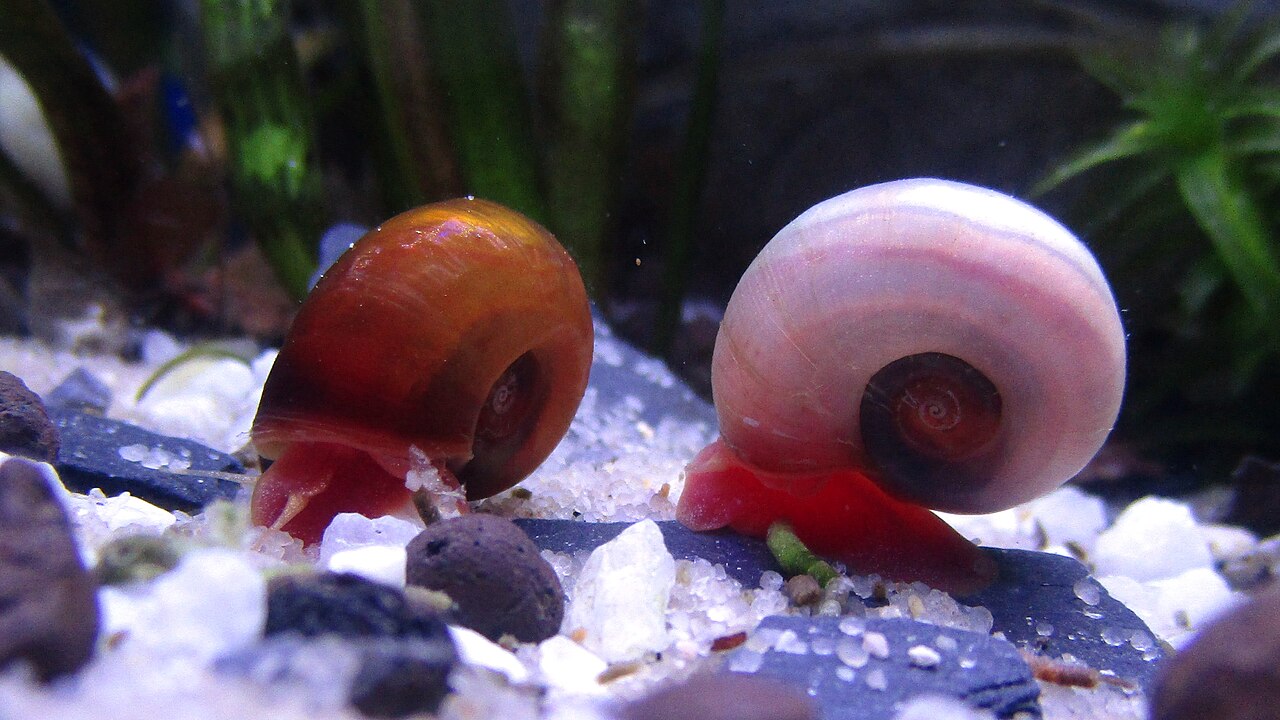
Nerite snail
- Algae grazing
- High
- Breeding speed
- Not applicable
- Population growth
- Low
- Adult size
- 13–38 mm Axis not stated · varies
- Lifespan
- 1–2 years
- Water
- 22–26 °C
Reported range across aquarium nerite species, not the size of every type.
- Eats plants
- No
- With shrimp
- Yes
What is a nerite snail?
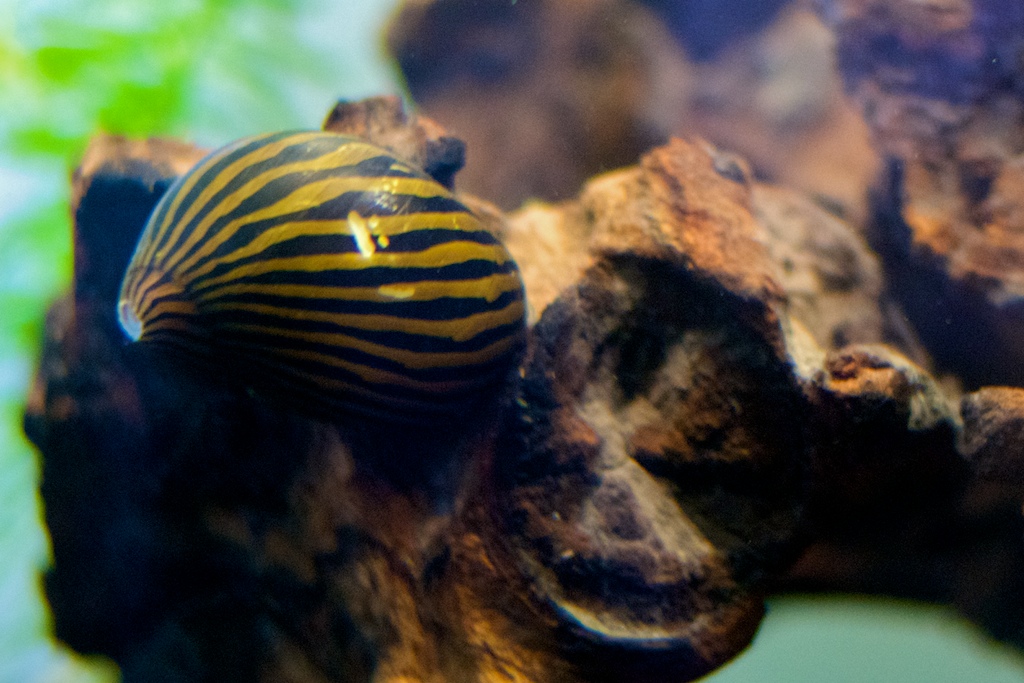
This guide covers tropical nerites sold for freshwater aquariums, including zebra, tiger, horned and racer trade types. Several different species are sold under these names. Marine-only nerites and Theodoxus are outside its scope. Confirm the animal behind a trade label before applying care values; the zebra photograph represents one member, not the whole group.
Scientific scope: Tropical aquarium nerites (Neritidae)
Quick stats
Water
- Water temperature
- 22–26 °C
- pH
- 7.5–8.5 pH
Tank mates
- With shrimp
- Yes Peaceful dwarf shrimp with matching water needs.
- With fish
- Caution
- With other snails
- Caution
Home
- Starting tank
- 20 litres For one small nerite in a mature, filtered tank with sufficient algae. A conservative starting recommendation; larger types or extra animals may need more room and food.
- Secure lid
- Yes
Habits
- Lifespan
- 1–2 years
- Active time
- Varies
How big do they get?
Size depends on the nerite. The common trade group includes small horned snails and larger racers. The published overview spans about 13–38 mm, so a single adult-size promise would mislead.
- Adult shell size
- 13–38 mm (Axis not stated) — varies Reported range across aquarium nerite species, not the size of every type. Fact source
Sources and scope
Aquarium Co-Op, nerite husbandry based on animals in its care.
Checked 2026-11-01
How long do they live?
Plan for about 1–2 years, sometimes longer. Food supply, acclimation and the particular species affect that estimate.
- Lifespan
- 1–2 years Usual aquarium estimate; some live longer. Fact source
Sources and scope
Aquarium Care Basics, first-hand nerite observations; used for grazing, lifespan, containment and companions.
Checked 2026-11-01
What do they eat?
Provide established algae and biofilm on glass, wood or stones. Offer suitable algae-based foods, but watch whether your snail actually eats them. A keeper reporting rejected wafers is a useful reminder that a food placed in the tank is not necessarily a meal.
- Diet type
- Herbivore Primarily algae and biofilm grazing. Fact source
Sources and scope
UKAPS, lilirose (26 September 2020), first-hand keeper observation of burying and food rejection; anecdotal, not a group-wide rule. Prepared-food suggestions: Aquatic Arts, linked beside diet.
Checked 2026-11-01
Do they eat plants?
They normally graze plant surfaces without eating healthy leaves. This makes them useful in planted aquariums; decaying foliage can still attract grazing.
- Plant eating
- No Healthy aquarium plants are normally left alone. Fact source
Sources and scope
Aquatic Arts, zebra nerite husbandry; applied only as a starting point for tropical freshwater-kept nerites.
Checked 2026-11-01
Do they eat algae or clean the tank?
Yes: algae grazing is their main attraction. Keep normal maintenance going, and avoid adding more grazers than the aquarium can feed.
- Algae role
- High High means a dedicated surface grazer, not guaranteed removal of every algae type. Fact source
Sources and scope
Aquarium Care Basics, first-hand nerite observations; used for grazing, lifespan, containment and companions.
Checked 2026-11-01
What eats them?
Avoid puffers, snail-eating loaches and predatory crustaceans. A shell does not protect the exposed foot and tentacles from persistent harassment. Keep assassin snails separate: they can prey on these snails.
- Predators
- Pufferfish, snail-eating loaches, larger predatory crustaceans and assassin snails. Crustaceans: Aquarium Care Basics, linked in compatibility. Fact source
Sources and scope
Aquatic Arts, zebra nerite husbandry; applied only as a starting point for tropical freshwater-kept nerites. Crustaceans: Aquarium Care Basics, linked in compatibility. Assassin predation: https://www.aquariumcoop.com/blogs/aquarium/assassin-snail (checked 2026-11-02).
Checked 2026-11-02
Are they safe with shrimp, fish and other snails?
Peaceful dwarf shrimp and non-predatory snails can share suitable water. Choose fish carefully and monitor feeding competition. A compatible temperature alone does not make a predator safe.
- With shrimp
- Yes Peaceful dwarf shrimp with matching water needs. Fact source
- With fish
- Caution Exclude snail predators and persistent nippers. Fact source
- With other snails
- Caution Peaceful snails only; competition for grazing matters. Predatory snails are unsuitable. Fact source
Sources and scope
Aquarium Care Basics, first-hand nerite observations; used for grazing, lifespan, containment and companions.
Checked 2026-11-01
How many per tank?
Start with one small nerite in 20 litres or more, with established filtration and enough grazing. This rounds Chewy’s 5-US-gallon recommendation upwards. Aquarium Co-Op suggests 2–3 US gallons (roughly 8–11 litres); our figure is a more conservative starting recommendation, not a universal minimum. Food availability, species and other livestock still matter.
- Starting tank volume with conditions
- 20 litres For one small nerite in a mature, filtered tank with sufficient algae. A conservative starting recommendation; larger types or extra animals may need more room and food. Fact source
Sources and scope
Chewy, nerite care; aquarium recommendations, not species-wide tolerance limits. Smaller recommendation: https://www.aquariumcoop.com/blogs/aquarium/nerite-snail-care .
Checked 2026-11-02
Do they need a heater, or can they live in cold water?
22–26°C is the cited zebra-nerite starting range. Use a heater if your aquarium cannot maintain it, and check requirements before buying another nerite type.
- Recommended water temperature
- 22–26 °C Tropical starting recommendation; confirm the particular type. Fact source
Sources and scope
Aquatic Arts, zebra nerite husbandry; applied only as a starting point for tropical freshwater-kept nerites.
Checked 2026-11-01
What water do they need?
Use pH 7.5–8.5 and GH 6–12°dGH as attributed freshwater guidance. Confirm the species and other inhabitants before changing water chemistry. These are care recommendations, not measured survival limits.
- pH
- 7.5–8.5 pH Practical freshwater care band, not a tolerance experiment. Fact source
- Hardness guidance with units
- 6–12 °dGH; confirm the particular nerite and tank mates. Fact source
Sources and scope
Chewy, nerite care; aquarium recommendations, not species-wide tolerance limits.
Checked 2026-11-01
How do they breed, and how fast?
These tropical trade nerites have separate sexes. Their larvae normally need brackish or marine conditions to develop, so ordinary freshwater tanks do not produce a growing colony. Do not add salt to a community aquarium to attempt breeding.
- Can reproduce in a freshwater aquarium
- No Means completing reproduction into juveniles in an ordinary freshwater aquarium. Females can still lay eggs. Fact source
- Breeding speed
- Not applicable No normal freshwater recruitment for the tropical trade group covered here. Egg-laying frequency is a different question. Fact source
- Pair needed
- Yes Separate sexes are required for fertilisation; keeping one does not rule out egg capsules. Fact source
Sources and scope
Aquarium Co-Op, nerite husbandry based on animals in its care.
Checked 2026-11-01
What do the eggs look like, and how long do they take to hatch?
The small white marks on hard surfaces are egg capsules. They can appear in freshwater without producing baby snails. Hatching reports depend on species and conditions; there is no dependable group-wide countdown.
- Reproduction type
- Egg laying Fact source
- Hatching time
- Varies Reports span days to weeks under breeding conditions. Species, salinity and temperature matter; hatching is not successful juvenile development. Fact source
Sources and scope
Aquarium Co-Op, nerite husbandry based on animals in its care.
Checked 2026-11-01
Are they good or bad, and how do I get rid of them?
Population growth is usually low in freshwater, but egg marks may bother you. Decide whether that trade-off suits the display before adding a snail; an algae eater is still an animal needing ongoing care.
- Population growth concern
- Low Low population-growth concern in ordinary freshwater; visible egg capsules can still be unwanted. Fact source
Sources and scope
Chewy, nerite care; aquarium recommendations, not species-wide tolerance limits.
Checked 2026-11-01
Are they nocturnal, and why do they hide?
Expect periods of grazing and rest. Some keepers report burying, but this does not establish a fixed routine for every species. Check food and water if behaviour changes.
- Active time
- Varies Resting and post-introduction inactivity occur. No fixed day/night schedule is assigned to this mixed group. Fact source
- Burrows
- Varies Some keepers observe burying. This is a reported behaviour, not a requirement of every nerite. Fact source
Sources and scope
UKAPS, lilirose (26 September 2020), first-hand keeper observation of burying and food rejection; anecdotal, not a group-wide rule.
Checked 2026-11-01
Can they survive out of water or climb out?
Fit a secure lid and cover gaps. Nerites can pass the waterline. Keep handling brief; a reported ability to survive air exposure is not a reason to leave one out.
- Secure lid needed
- Yes Close snail-sized gaps while maintaining normal ventilation. Fact source
Sources and scope
Aquarium Care Basics, first-hand nerite observations; used for grazing, lifespan, containment and companions.
Checked 2026-11-01
Is it dead, or just not moving?
Stillness alone does not prove death, particularly after introduction. Check attachment, water and food; investigate a persistent change. A decomposing animal needs prompt removal. Do not force open the shell door.
Sources and scope
Pro Shrimp, inactivity after introduction; retailer observation.
Checked 2026-11-01
Why is the shell damaged, and do they need calcium?
Calcium is needed for new shell growth. Review minerals, pH and feeding if the shell deteriorates; add supplements only after checking what the aquarium lacks.
- Calcium required
- Yes Calcium supports shell growth; test water before adding minerals. Fact source
Sources and scope
Aquatic Arts, zebra nerite husbandry; applied only as a starting point for tropical freshwater-kept nerites.
Checked 2026-11-01
About this identification
Aquarium Care Basics, first-hand nerite observations; used for grazing, lifespan, containment and companions.
Identification reference · checked 2026-11-01
Keep them contained: never release aquarium snails or eggs into the wild.
Meet another snail
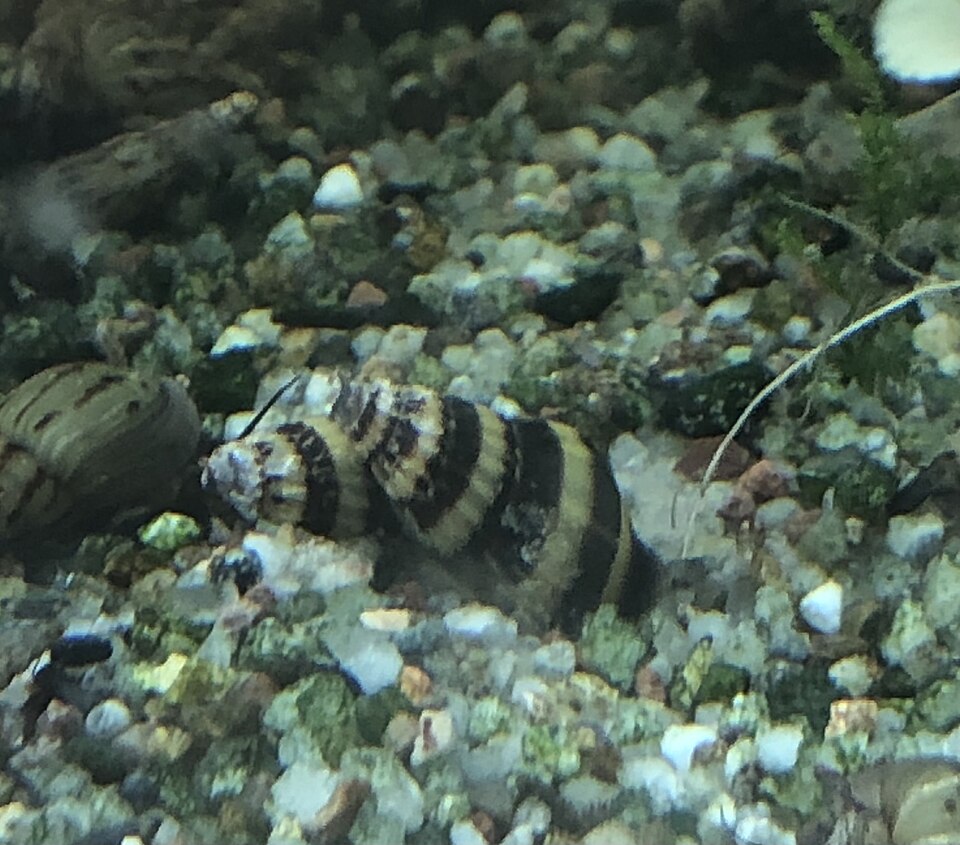 No. 002Assassin snailCarnivore