Apple snail
- Algae grazing
- Some
- Breeding speed
- Varies
- Population growth
- High
- Adult size
- 40–60 mm Shell width · varies
- Lifespan
- 1–4 years
- Water
- 18–28 °C
40–60 mm shell width is a P. canaliculata example only. Some Pomacea reach about 150 mm across.
- Eats plants
- Varies
- With shrimp
- Caution
What is an apple snail?
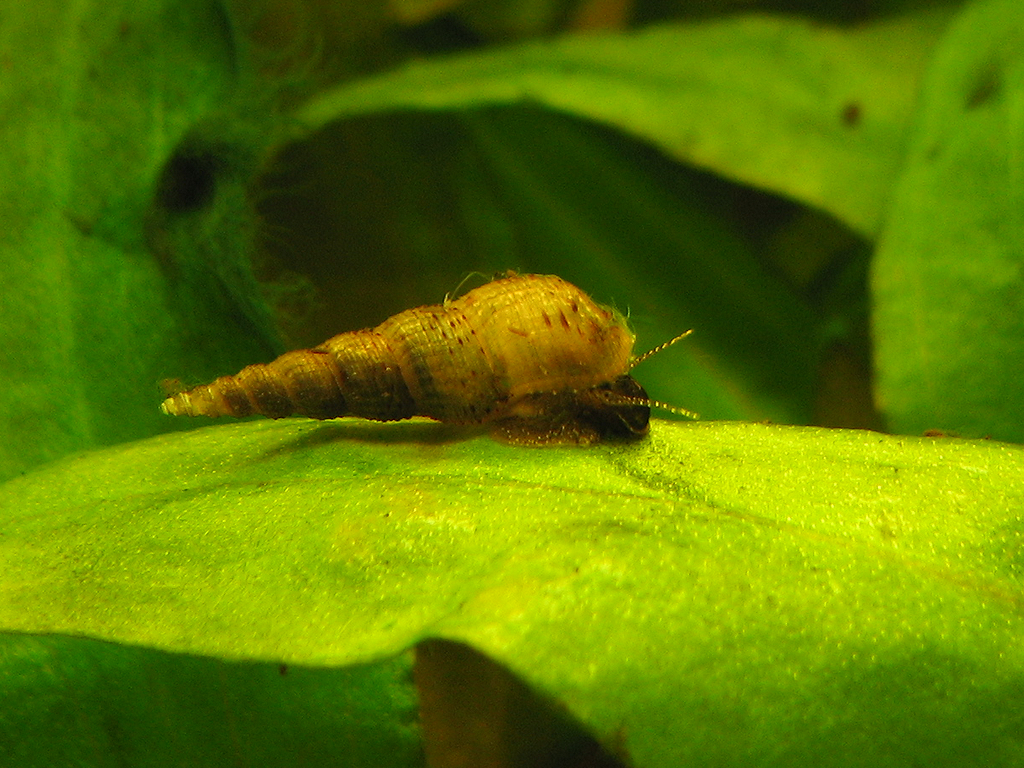
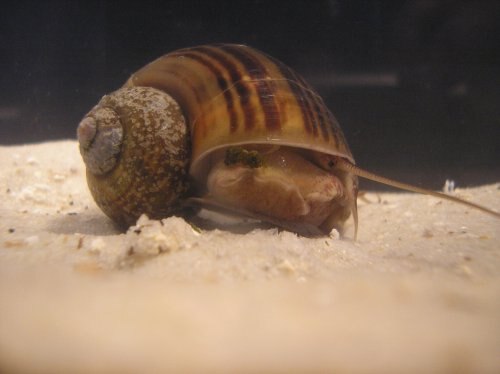
This overview covers aquarium Pomacea, including P. diffusa (mystery snail), P. canaliculata and larger relatives. Other apple-snail genera such as Pila and Marisa are outside its scope. The photograph is labelled P. canaliculata by its photographer; it is an example, not identification of shop stock.
Scientific scope: Pomacea spp. (apple-snail group)
Quick stats
Water
- Water temperature
- 18–28 °C
- pH
- 7.2–8 pH
Tank mates
- With shrimp
- Caution Do not assume every Pomacea is shrimp-safe. Confirm species and behaviour before mixing.
- With fish
- Caution
- With other snails
- Caution
Home
- Starting tank
- 20 litres Baseline for one medium apple snail around 5 cm, with filtration. Not sufficient guidance for giant Pomacea or extra livestock; confirm adult size.
- Secure lid
- Yes
Habits
- Lifespan
- 1–4 years
- Active time
- Varies
How big do they get?
Identify the species before planning its home. P. canaliculata is described at 40–60 mm wide and 45–75 mm high. That is not a limit for the whole group: Defra records some Pomacea reaching roughly 150 mm in diameter.
- Adult shell size
- 40–60 mm (Shell width) — varies 40–60 mm shell width is a P. canaliculata example only. Some Pomacea reach about 150 mm across. Fact source
Sources and scope
AppleSnail.net, Pomacea canaliculata account; example species only, not all apple snails. Larger species: Defra factsheet linked in population answer.
Checked 2026-11-02
How long do they live?
A broad guide is 1–4 years, with some living longer. Species, age at purchase and temperature make a single group-wide lifespan unreliable.
- Lifespan
- 1–4 years Broad group estimate; some exceed four years. Species and temperature matter. Fact source
Sources and scope
AppleSnail.net, introductory guide; broad lifespan estimate, not a guarantee for each species.
Checked 2026-11-02
What do they eat?
Offer suitable sinking food and vegetables, adjusting portions to what is eaten. P. canaliculata readily eats vegetation; this does not make live display plants a sensible feeding plan.
- Diet type
- Omnivore Plant material, prepared foods and other organic food; preferences differ. Fact source
Sources and scope
AppleSnail.net, Pomacea canaliculata account; example species only, not all apple snails.
Checked 2026-11-02
Do they eat plants?
Which apple snail? P. canaliculata can strip living plants. P. diffusa usually prefers softer or dead material: see our mystery snail care guide. A yellow shell does not settle the identification.
- Plant eating
- Varies P. canaliculata eats live plants readily; mystery snails usually favour softer or dead material. Fact source
Sources and scope
AppleSnail.net, specialist keeper guidance; distinguish Pomacea species from other apple-snail genera.
Checked 2026-11-02
Do they eat algae or clean the tank?
Some grazing is normal, but these are not dependable all-purpose algae removers. Choose one for its care needs and behaviour, not a cleaning promise.
- Algae role
- Some Some grazing; no whole-tank cleaning promise. Fact source
Sources and scope
Maidenhead Aquatics, Pomacea aquarium guidance. Legal wording is checked separately against Defra.
Checked 2026-11-02
What eats them?
Puffers, snail-eating loaches and some cichlids can injure or eat them. Persistent nipping can also prevent feeding and access to the surface.
- Predators
- Snail-eating loaches, puffers and predatory or persistent nipping fish. Fact source
Sources and scope
Maidenhead Aquatics, Pomacea aquarium guidance. Legal wording is checked separately against Defra.
Checked 2026-11-02
Are they safe with shrimp, fish and other snails?
Use species-specific advice before mixing with shrimp or smaller snails. Some Pomacea eat other snails. Peaceful fish still need compatible water and enough space.
- With shrimp
- Caution Do not assume every Pomacea is shrimp-safe. Confirm species and behaviour before mixing. Fact source
- With fish
- Caution Peaceful companions only; exclude snail predators and harassment. Fact source
- With other snails
- Caution Some apple snails eat other snails; the group is not uniformly snail-safe. Fact source
Sources and scope
AppleSnail.net, specialist keeper guidance; distinguish Pomacea species from other apple-snail genera.
Checked 2026-11-02
How many per tank?
OATA gives 20 litres as a starting aquarium size for larger snails such as apple snails. Here that is limited to one medium animal around 5 cm, with established filtration. It is not a recommendation for a giant species: confirm adult size and allow substantially more room for large animals or companions.
- Starting tank volume with conditions
- 20 litres Baseline for one medium apple snail around 5 cm, with filtration. Not sufficient guidance for giant Pomacea or extra livestock; confirm adult size. Fact source
Sources and scope
OATA, general freshwater snail welfare; tank-size advice requires species and stocking context. Medium-size context: AppleSnail.net care guide, which discusses 5 cm animals and filtration-dependent stocking.
Checked 2026-11-02
Do they need a heater, or can they live in cold water?
The specialist guide gives 18–28°C for aquarium care. Use the identified species to choose a stable target; the ability of some wild populations to survive cold periods is not an aquarium recommendation.
- Recommended water temperature
- 18–28 °C Broad specialist aquarium guidance; choose a stable species-appropriate point within it. Fact source
Sources and scope
AppleSnail.net, specialist keeper guidance; distinguish Pomacea species from other apple-snail genera.
Checked 2026-11-02
What water do they need?
The cited aquarium guide recommends pH 7.2–8.0 and KH 10–20°dKH. Confirm the species and companions before changing water. KH describes buffering, not general hardness.
- pH
- 7.2–8 pH Attributed aquarium guidance for Pomacea; confirm the species. Fact source
- Hardness guidance with units
- KH 10–20°dKH in the cited aquarium guide; confirm species and companions. Fact source
Sources and scope
Maidenhead Aquatics, Pomacea aquarium guidance. Legal wording is checked separately against Defra.
Checked 2026-11-02
How do they breed, and how fast?
Pomacea have separate sexes. A previously mated female can retain sperm, so keeping one alone does not guarantee infertile eggs. Plan for offspring before allowing clutches to develop.
- Can reproduce in a freshwater aquarium
- Yes Fact source
- Breeding speed
- Varies Egg production depends on species, temperature and food; large clutches can produce many young. Fact source
- Pair needed
- Yes Separate sexes for fertilisation, but females can store sperm and later lay fertile eggs alone. Fact source
Sources and scope
AppleSnail.net, specialist keeper guidance; distinguish Pomacea species from other apple-snail genera.
Checked 2026-11-02
What do the eggs look like, and how long do they take to hatch?
Common aquarium types place conspicuous clutches above water. 14–28 days is a broad hatching estimate; temperature and humidity matter. Keep exposed clutches above water. Unusual species can brood differently, so identify the animal first.
- Reproduction type
- Egg laying Fact source
- Hatching time
- 14–28 days Typical exposed aquarium egg-clutch estimate; species, temperature and humidity matter. Fact source
Sources and scope
AppleSnail.net, specialist keeper guidance; distinguish Pomacea species from other apple-snail genera.
Checked 2026-11-02
Are they good or bad, and how do I get rid of them?
A fertile clutch can produce many young. Plan homes before breeding, and never release snails outdoors.\n\nUK context, checked 2 November 2026: Defra’s factsheet says Pomacea are no longer GB quarantine plant pests, while Northern Ireland retains quarantine controls. This is not blanket permission to import, sell or send them anywhere; check the applicable rules for the proposed movement.
- Population growth concern
- High Large fertile clutches can mean many juveniles. This rating concerns population potential, not every individual. Fact source
Sources and scope
Defra Pomacea factsheet, revised December 2023; accessed 2 November 2026. GB plant-pest deregulation differs from Northern Ireland; not blanket import or sale clearance.
Checked 2026-11-02
Are they nocturnal, and why do they hide?
P. canaliculata is often more active after dark. Other species and temperatures produce different routines. Give sheltered resting places without deliberately inducing cold or dry dormancy.
- Active time
- Varies P. canaliculata often favours night; activity depends on species and temperature. Fact source
- Burrows
- Varies Some Pomacea retreat into mud during dormancy; this is not a requirement to induce in an aquarium. Fact source
Sources and scope
AppleSnail.net, Pomacea canaliculata account; example species only, not all apple snails.
Checked 2026-11-02
Can they survive out of water or climb out?
Secure the lid and gaps, while preserving ventilation and access to the water surface. Leaving the water is possible, especially around egg laying; a fall can damage the shell.
- Secure lid needed
- Yes Allow surface access and a ventilated air gap under a secure lid. Fact source
Sources and scope
Maidenhead Aquatics, Pomacea aquarium guidance. Legal wording is checked separately against Defra.
Checked 2026-11-02
Is it dead, or just not moving?
Resting or floating alone does not prove death. Check water and temperature, then look for a persistent change or decomposition. Remove a clearly dead animal promptly.
Sources and scope
AppleSnail.net, introductory guide; broad lifespan estimate, not a guarantee for each species.
Checked 2026-11-02
Why is the shell damaged, and do they need calcium?
Calcium is needed for shell growth. If damage appears, review diet and water chemistry before supplementing.
- Calcium required
- Yes Fact source
Sources and scope
OATA, general freshwater snail welfare; tank-size advice requires species and stocking context.
Checked 2026-11-02
About this identification
AppleSnail.net, specialist keeper guidance; distinguish Pomacea species from other apple-snail genera. Species identification can be difficult: Defra factsheet linked in the population answer.
Identification reference · checked 2026-11-02
Keep them contained: never release aquarium snails or eggs into the wild.