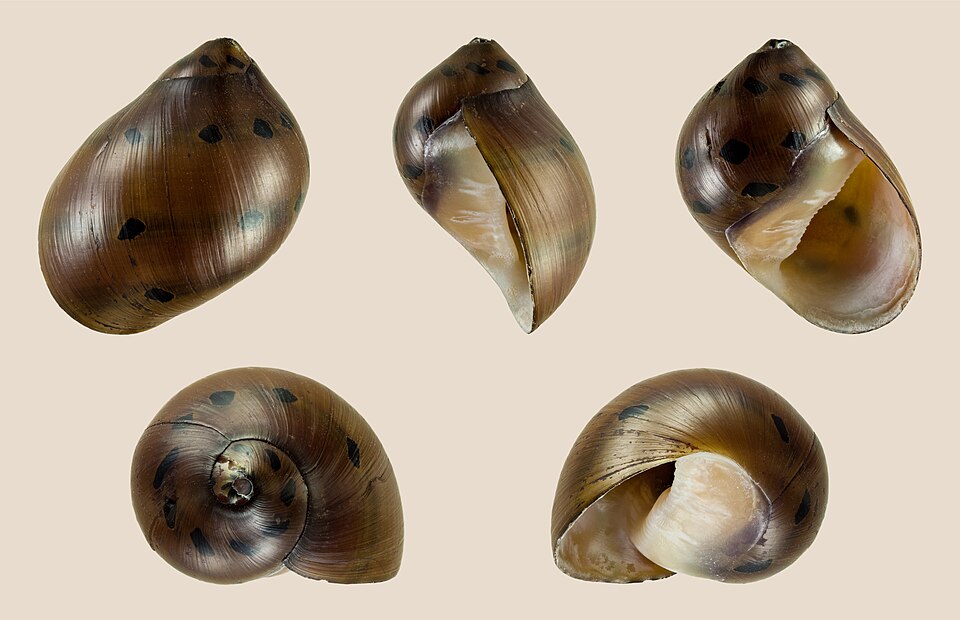
Japanese trapdoor snail
- Algae grazing
- High
- Breeding speed
- Varies
- Population growth
- Medium
- Adult size
- Varies
- Lifespan
- 1–5 years
- Water
- 20–29 °C
Up to about 50 mm reported by the breeder; measurement axis not stated. Adult size varies.
- Eats plants
- Sometimes
- With shrimp
- Yes
What is a Japanese trapdoor snail?
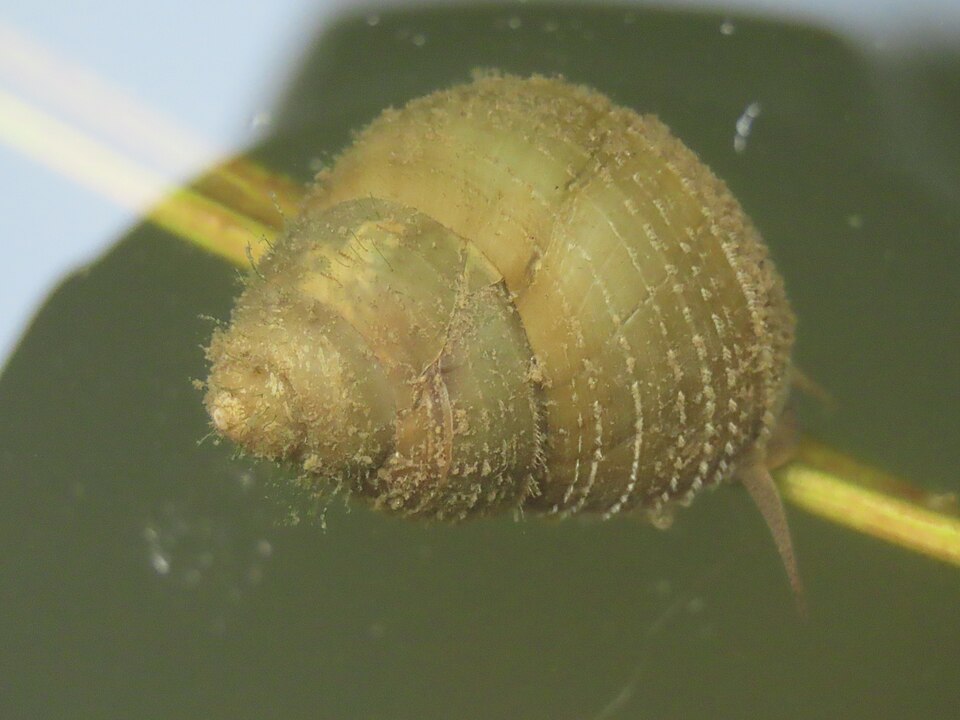
This entry covers the Sinotaia quadrata type sold as Japanese trapdoor by the cited breeder. The trade name also appears on other viviparids, including Heterogen japonica; those are not automatic synonyms. Confirm the supplier’s identification before applying this care band. Despite confusing “mystery snail” labels, this is not Pomacea diffusa. The wild photograph is labelled S. quadrata by its observer.
Scientific scope: Sinotaia quadrata
Quick stats
Water
- Water temperature
- 20–29 °C
- pH
- 6.5–8 pH
Tank mates
- With shrimp
- Yes Peaceful shrimp with compatible water needs.
- With fish
- Caution
- With other snails
- Caution
Home
- Starting tank
- 40 litres One adult in a mature, oxygenated aquarium; 10 US gallons rounded up. Allow more room for companions or young.
- Secure lid
- Yes
Habits
- Lifespan
- 1–5 years
- Active time
- Night
How big do they get?
The cited breeder reports an upper size of about 50 mm. The measurement axis is not given. Do not mistake the smaller sale size for the eventual size, or apply this maximum to every “trapdoor” species.
- Adult shell size
- Varies Up to about 50 mm reported by the breeder; measurement axis not stated. Adult size varies. Fact source
Sources and scope
Aquatic Arts, in-house bred stock sold as Sinotaia quadrata. These values do not cover every animal sold as Japanese trapdoor.
Checked 2026-11-02
How long do they live?
A keeper estimate is 1–5 years, but the account does not identify its animals independently. Treat this as trade-name guidance rather than a measured lifespan for every S. quadrata.
- Lifespan
- 1–5 years Keeper estimate under the trade name; species-specific longevity is not established here. Fact source
Sources and scope
Aquarium Care Basics, aquarium observations under the trade name Japanese trapdoor; species not independently established.
Checked 2026-11-02
What do they eat?
Provide natural algae and biofilm plus suitable sinking pellets and small portions of blanched vegetables. Observe feeding rather than assuming leftovers will sustain the snail.
- Diet type
- Omnivore Algae, biofilm, vegetables and prepared foods. Fact source
Sources and scope
Aquatic Arts, in-house bred stock sold as Sinotaia quadrata. These values do not cover every animal sold as Japanese trapdoor.
Checked 2026-11-02
Do they eat plants?
Usually a gentle grazer, but soft foliage may be eaten. Keep it fed and inspect delicate plants for damage.
- Plant eating
- Sometimes Soft foliage may be eaten; avoid a blanket plant-safe promise. Fact source
Sources and scope
Aquarium Care Basics, aquarium observations under the trade name Japanese trapdoor; species not independently established.
Checked 2026-11-02
Do they eat algae or clean the tank?
Soft-algae grazing is a useful part of its feeding. Keep mature grazing surfaces available and continue normal aquarium maintenance.
- Algae role
- High Regular soft-algae grazing; still feed deliberately. Fact source
Sources and scope
Aquatic Arts, in-house bred stock sold as Sinotaia quadrata. These values do not cover every animal sold as Japanese trapdoor.
Checked 2026-11-02
What eats them?
Avoid puffers, snail-eating loaches, predatory crustaceans and assassins. The closing operculum is protection, not a guarantee against persistent attacks.
- Predators
- Snail-eating fish, predatory crustaceans and assassin snails. Fact source
Sources and scope
Aquarium Co-Op, assassin-snail predation; size does not reliably protect other snails. Fish precautions: OATA general snail guidance.
Checked 2026-11-02
Are they safe with shrimp, fish and other snails?
Peaceful shrimp and non-predatory fish can work when their water requirements overlap. Use the comparison tool to check conditions as well as temperament.
- With shrimp
- Yes Peaceful shrimp with compatible water needs. Fact source
- With fish
- Caution Non-predatory community fish only. Fact source
- With other snails
- Caution Peaceful species; exclude assassin snails. Fact source
Sources and scope
Aquatic Arts, in-house bred stock sold as Sinotaia quadrata. These values do not cover every animal sold as Japanese trapdoor.
Checked 2026-11-02
How many per tank?
Allow 40 litres for one adult in a mature, filtered, oxygenated aquarium. This rounds a keeper’s 10-US-gallon recommendation upwards; growing families and other livestock need more space.
- Starting tank volume with conditions
- 40 litres One adult in a mature, oxygenated aquarium; 10 US gallons rounded up. Allow more room for companions or young. Fact source
Sources and scope
Aquarium Care Basics, aquarium observations under the trade name Japanese trapdoor; species not independently established.
Checked 2026-11-02
Do they need a heater, or can they live in cold water?
The S. quadrata breeder gives 20–29°C. Confirm the animal’s origin and current conditions. A label saying “pond snail” does not establish suitability for an unheated UK winter pond.
- Recommended water temperature
- 20–29 °C Breeder’s indoor band for its S. quadrata stock; confirm origin, rather than assuming winter pond suitability. Fact source
Sources and scope
Aquatic Arts, in-house bred stock sold as Sinotaia quadrata. These values do not cover every animal sold as Japanese trapdoor.
Checked 2026-11-02
What water do they need?
The breeder recommends pH 6.5–8.0 and soft to medium-hard water, without a numeric hardness band. Keep conditions stable and monitor shell growth; ask for the supplier’s measured GH and KH before changing minerals.
- pH
- 6.5–8 pH Breeder guidance; monitor shell condition towards the acidic end. Fact source
- Hardness guidance with units
- Soft to medium-hard water in the breeder guide; no numeric GH or KH is supplied. Fact source
Sources and scope
Aquatic Arts, in-house bred stock sold as Sinotaia quadrata. These values do not cover every animal sold as Japanese trapdoor.
Checked 2026-11-02
How do they breed, and how fast?
They have separate sexes and brood young internally. A female can arrive already carrying embryos, so babies after isolation do not prove self-fertilisation. Research records ongoing development, not a fixed monthly birth schedule.
- Can reproduce in a freshwater aquarium
- Yes Fact source
- Breeding speed
- Varies Young develop continuously within females; no reliable aquarium birth interval for this identified stock was established. Fact source
- Pair needed
- Yes Separate sexes; a female already carrying developing young can give birth alone. Fact source
Sources and scope
Arias et al. (2020), Aquatic Invasions 15:616–632, Sinotaia cf. quadrata morphology and internal brooding; population-specific evidence.
Checked 2026-11-02
What do the eggs look like, and how long do they take to hatch?
There is no external clutch to incubate. Young develop inside the female and emerge as tiny snails. Egg patches on the glass therefore belong to another animal.
- Reproduction type
- Livebearing Fact source
- Hatching time
- Not applicable Eggs develop internally; there is no external clutch to time. Fact source
Sources and scope
Arias et al. (2020), Aquatic Invasions 15:616–632, Sinotaia cf. quadrata morphology and internal brooding; population-specific evidence.
Checked 2026-11-02
Are they good or bad, and how do I get rid of them?
Plan space for offspring. Livebearing still permits a colony to grow; do not rely on generic claims that trapdoors never multiply much. Rehome unwanted young responsibly and never release aquarium animals outdoors.
- Population growth concern
- Medium Editorial planning category: brooded young can build a colony. Livebearing does not guarantee low population growth. Fact source
Sources and scope
Arias et al. (2020), Aquatic Invasions 15:616–632, Sinotaia cf. quadrata morphology and internal brooding; population-specific evidence. Medium is an editorial population-planning category, not a measured reproductive rate.
Checked 2026-11-02
Are they nocturnal, and why do they hide?
Often busy in low light or at night, with long rests. Burrowing is reported for S. quadrata; provide soft substrate without expecting a regular sand-cleaning service.
- Active time
- Night Often active in low light; daytime activity also occurs. Fact source
- Burrows
- Yes Reported by the exporter; offer soft substrate. Frequency in home aquariums is not quantified. Fact source
Sources and scope
Mariola Bali, exporter account for Sinotaia quadrata; describes burrowing in stable substrate. Indexed account checked; full page unavailable through the research browser. Night activity: Aquarium Care Basics, linked in the activity fact.
Checked 2026-11-02
Can they survive out of water or climb out?
Fit a secure lid and protect filter intakes with a suitable sponge guard. A trapdoor does not make a fall or drying out harmless.
- Secure lid needed
- Yes Fact source
Sources and scope
Aquarium Care Basics, aquarium observations under the trade name Japanese trapdoor; species not independently established.
Checked 2026-11-02
Is it dead, or just not moving?
A shut operculum can mean rest. Check water and observe a persistent change before assuming death; never pry the door open.
Sources and scope
Pro Shrimp, keeper guidance: inactivity alone does not establish death.
Checked 2026-11-02
Why is the shell damaged, and do they need calcium?
Minerals and a suitable diet support new shell growth. Investigate erosion and water chemistry before supplementing.
- Calcium required
- Yes Fact source
Sources and scope
Aquarium Care Basics, aquarium observations under the trade name Japanese trapdoor; species not independently established.
Checked 2026-11-02
About this identification
Aquatic Arts, in-house bred stock sold as Sinotaia quadrata. These values do not cover every animal sold as Japanese trapdoor. Taxonomic scope: Ye et al. (2021); other trade identity: https://learn.misin.msu.edu/webapp/facts/detail/?cname=Japanese+mysterysnail&id=374&project=misin .
Identification reference · checked 2026-11-02
Keep them contained: never release aquarium snails or eggs into the wild.
Meet another snail
 No. 009Pond snailOmnivore