Rabbit snail
- Algae grazing
- Some
- Breeding speed
- Low
- Population growth
- Low
- Adult size
- 20–120 mm Axis not stated · varies
- Lifespan
- 1–3 years
- Water
- 25–29 °C
Reported 20–120 mm across the trade group; dwarf and giant types differ.
- Eats plants
- Sometimes
- With shrimp
- Yes
What is a rabbit snail?
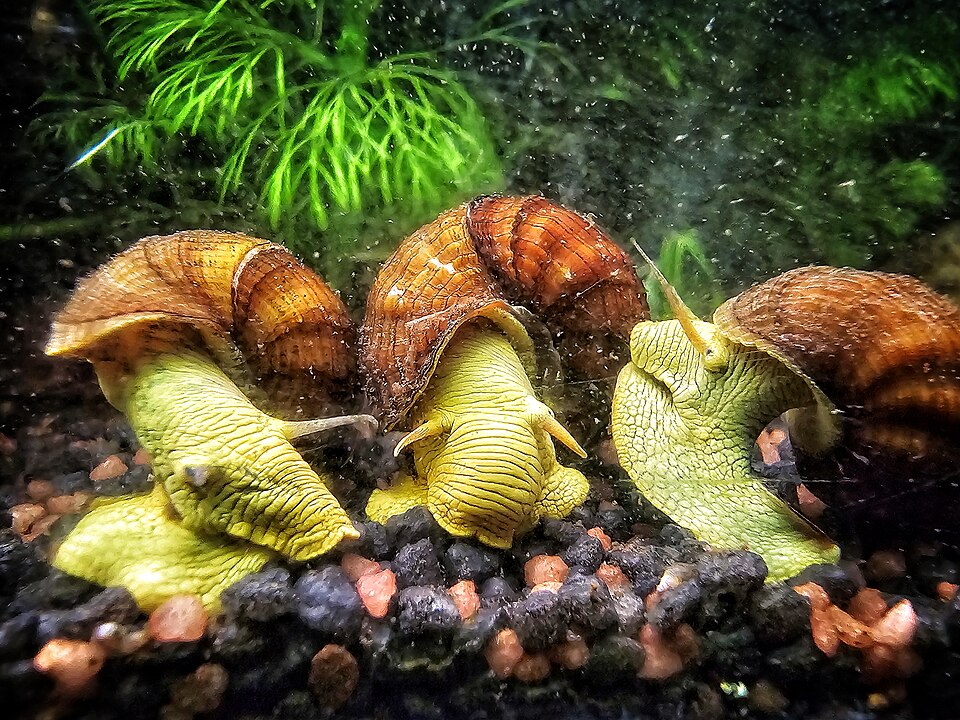
Rabbit, elephant and Sulawesi snail can all describe Tylomelania. This guide covers the aquarium trade group, not one confirmed species. Colour names do not establish identity; dwarf and giant types have different adult sizes. The photograph is a yellow Tylomelania example, not Our Fish Collective stock.
Scientific scope: Tylomelania spp.
Quick stats
Water
- Water temperature
- 25–29 °C
- pH
- 7.5–8.5 pH
Tank mates
- With shrimp
- Yes Peaceful shrimp only, with matching warm-water needs.
- With fish
- Caution
- With other snails
- Caution
Home
- Starting tank
- 40 litres For one large rabbit snail: 10 US gallons rounded up. Allow clear floor space; extra livestock need more room.
- Secure lid
- Yes
Habits
- Lifespan
- 1–3 years
- Active time
- Day and night
How big do they get?
Check the type before choosing the tank. The group spans roughly 20–120 mm; a dwarf rabbit and a giant rabbit are very different animals to accommodate.
- Adult shell size
- 20–120 mm (Axis not stated) — varies Reported 20–120 mm across the trade group; dwarf and giant types differ. Fact source
Sources and scope
Maidenhead Aquatics, Tylomelania group husbandry. Species differ; not a universal tolerance study.
Checked 2026-11-02
How long do they live?
A practical keeper estimate is 1–3 years, sometimes longer. A purchased adult’s age may already be unknown.
- Lifespan
- 1–3 years Keeper estimate; some live longer. Fact source
Sources and scope
Aquarium Care Basics, keeper observations of aquarium rabbit snails; exact species not established.
Checked 2026-11-02
What do they eat?
Offer sinking pellets, algae wafers and small portions of blanched vegetables. Watch the snail reach its food; leftovers are not a dependable feeding plan. Remove uneaten food before it fouls the water.
- Diet type
- Omnivore Offer plant-based foods and suitable sinking mixed foods. Fact source
Sources and scope
Aquatic Arts, captive-bred Tylomelania patriarchalis; applied as an explicitly scoped large-rabbit care example.
Checked 2026-11-02
Do they eat plants?
Some types eat soft foliage. Choose robust plants and monitor new damage; “plant safe” is not a promise for every rabbit snail.
- Plant eating
- Sometimes Soft leaves can be eaten; species and feeding matter. Fact source
Sources and scope
Maidenhead Aquatics, Tylomelania group husbandry. Species differ; not a universal tolerance study.
Checked 2026-11-02
Do they eat algae or clean the tank?
They graze some algae and decaying material, but still need regular food. Do not buy one as a substitute for cleaning the aquarium.
- Algae role
- Some Some grazing; feed directly too. Fact source
Sources and scope
Aquatic Arts, captive-bred Tylomelania patriarchalis; applied as an explicitly scoped large-rabbit care example.
Checked 2026-11-02
What eats them?
Keep assassin snails separate: their prey can include large rabbit snails. Also avoid snail-eating fish, crabs and crayfish.
- Predators
- Puffers, snail-eating loaches, predatory crustaceans and assassin snails. Fish and crustaceans: rabbit keeper guide, linked under compatibility. Fact source
Sources and scope
Aquarium Co-Op, assassin-snail predation, including trumpet snails and larger rabbit snails. Other predators: https://www.aquariumcarebasics.com/freshwater-snails/rabbit-snail/ .
Checked 2026-11-02
Are they safe with shrimp, fish and other snails?
Peaceful shrimp and snails can work if their water needs overlap. Check the temperature as carefully as temperament, and make sure faster feeders leave the rabbit a meal.
- With shrimp
- Yes Peaceful shrimp only, with matching warm-water needs. Fact source
- With fish
- Caution Avoid predators and food competitors. Fact source
- With other snails
- Caution Peaceful species only; even large rabbit snails can be attacked by assassins. Fact source
Sources and scope
Aquarium Care Basics, keeper observations of aquarium rabbit snails; exact species not established.
Checked 2026-11-02
How many per tank?
For one large rabbit snail, start around 40 litres, with open floor space and established filtration. This rounds the breeder’s 10-US-gallon advice upwards. Aquarium Care Basics recommends a much larger 29-US-gallon tank, about 110 litres. There is no agreed group-wide minimum; adult size, companions and layout determine whether 40 litres is enough.
- Starting tank volume with conditions
- 40 litres For one large rabbit snail: 10 US gallons rounded up. Allow clear floor space; extra livestock need more room. Fact source
Sources and scope
Aquatic Arts, captive-bred Tylomelania patriarchalis; applied as an explicitly scoped large-rabbit care example. Alternative recommendation: https://www.aquariumcarebasics.com/freshwater-snails/rabbit-snail/ .
Checked 2026-11-02
Do they need a heater, or can they live in cold water?
Use 25–29°C as a practical band for the cited captive-bred giant type. Confirm the seller’s conditions for another species. A typical cool room is not a suitable unheated setup.
- Recommended water temperature
- 25–29 °C Rounded working band within the breeder’s 24.4–29°C guidance; confirm the type. Fact source
Sources and scope
Aquatic Arts, captive-bred Tylomelania patriarchalis; applied as an explicitly scoped large-rabbit care example.
Checked 2026-11-02
What water do they need?
The cited breeder recommends pH 7.5–8.5. High pH does not automatically mean hard water: Fishkeeper describes some lake habitats below 8°dH. Check the animal’s origin and current water before changing minerals.
- pH
- 7.5–8.5 pH Alkaline care band for the cited large-rabbit stock. Fact source
- Hardness guidance with units
- Confirm the type: some lake forms come from soft water below 8°dH, despite alkaline pH. Fact source
Sources and scope
Aquatic Arts, captive-bred Tylomelania patriarchalis; applied as an explicitly scoped large-rabbit care example. Hardness context: https://www.fishkeeper.co.uk/fish/freshwater/miscellaneous/sulawesi-snail .
Checked 2026-11-02
How do they breed, and how fast?
They have separate sexes and can breed in freshwater. A previously mated female may produce young even when kept alone. Young develop internally and arrive slowly.
- Can reproduce in a freshwater aquarium
- Yes Fact source
- Breeding speed
- Low Slow reproduction compared with prolific small hitchhiking snails. Fact source
- Pair needed
- Yes Separate sexes; a previously mated female can later produce young alone. Fact source
Sources and scope
Aquatic Arts, Where Did This Baby Rabbit Snail Come From? Breeder explanation of internal development and young from a previously mated female. Separate sexes: Fishkeeper, linked in pair-needed fact.
Checked 2026-11-02
What do the eggs look like, and how long do they take to hatch?
Expect a developed baby released in a pale, soft casing, not a clutch stuck to the glass. An external egg-hatching countdown therefore does not apply.
- Reproduction type
- Livebearing Young develop internally; the thin casing released at birth opens around a developed juvenile. Fact source
- Hatching time
- Not applicable Livebearing: no external egg clutch to time in days. Fact source
Sources and scope
Aquatic Arts, Where Did This Baby Rabbit Snail Come From? Breeder explanation of internal development and young from a previously mated female. Casing observed by Aquarium Care Basics, linked in lifespan fact.
Checked 2026-11-02
Are they good or bad, and how do I get rid of them?
Slow reproduction makes a sudden population boom less likely. Keep track of young and arrange suitable homes before increasing numbers.
- Population growth concern
- Low Slow population growth; still plan homes for offspring. Fact source
Sources and scope
Aquatic Arts, captive-bred Tylomelania patriarchalis; applied as an explicitly scoped large-rabbit care example.
Checked 2026-11-02
Are they nocturnal, and why do they hide?
Grazing can happen by day or night, with long rests between meals. Burrowing is also observed in captive rabbit snails; provide soft substrate as well as accessible hard surfaces.
- Active time
- Day and night Fact source
- Burrows
- Yes Observed in captive rabbit snails; provide soft substrate, without assuming every species follows the same routine. Fact source
Sources and scope
Alyssa, first-hand rabbit-snail breeding account, 12 November 2025. Direct observation of adults and young burying in soft substrate; not independent species identification. Day/night activity and resting: Aquarium Care Basics, linked in activity fact.
Checked 2026-11-02
Can they survive out of water or climb out?
Use a secure, ventilated lid and cover escape gaps. Protect strong filter intakes with a suitable sponge guard.
- Secure lid needed
- Yes Fact source
Sources and scope
Aquarium Care Basics, keeper observations of aquarium rabbit snails; exact species not established.
Checked 2026-11-02
Is it dead, or just not moving?
A motionless rabbit snail may be resting. Check water, temperature and recent feeding before assuming death. Investigate persistent changes without pulling the animal from its shell.
Sources and scope
Pro Shrimp, keeper guidance on inactivity; stillness alone does not establish death.
Checked 2026-11-02
Why is the shell damaged, and do they need calcium?
Calcium and suitable water chemistry support new shell growth. Review pH, hardness and food if the shell deteriorates; avoid adding minerals blindly.
- Calcium required
- Yes Minerals support shell growth; test before supplementing. Fact source
Sources and scope
Aquarium Care Basics, keeper observations of aquarium rabbit snails; exact species not established.
Checked 2026-11-02
About this identification
Maidenhead Aquatics, Tylomelania group husbandry. Species differ; not a universal tolerance study.
Identification reference · checked 2026-11-02
Keep them contained: never release aquarium snails or eggs into the wild.